
Introducing ZilchOS: Your Self-Hosted Personal AI Assistant
For the last few years, "AI assistant" has meant handing your data to someone else's cloud. You type into a box, your words travel to a data center you don't control, and the intelligence you rely on can change its terms, its pricing, or its memory of you overnight. The capability is remarkable. The arrangement is not.
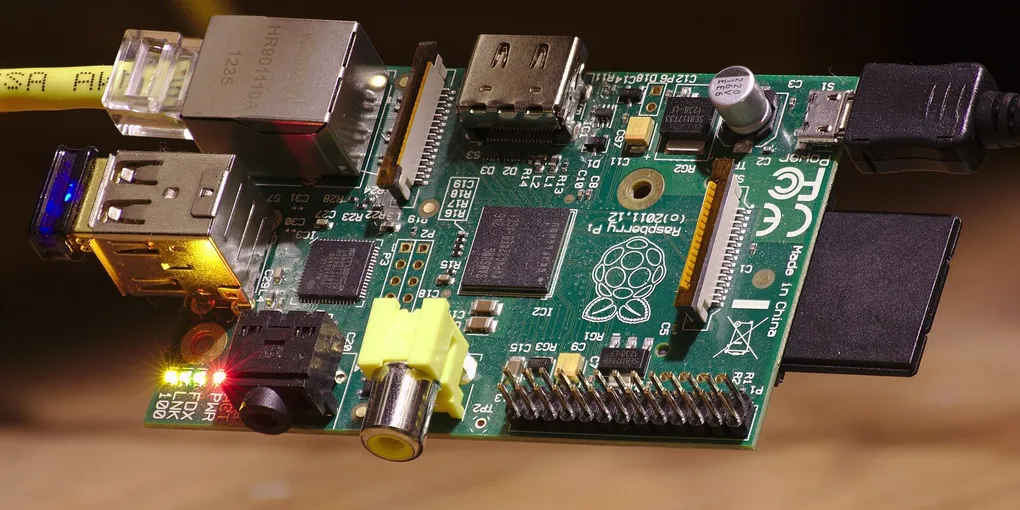
I built ZilchOS to flip that arrangement. ZilchOS is a personal AI assistant that runs on your own computer, home server, or even a Raspberry Pi — giving you full control over your data and your AI. It connects to the apps and devices you already use every day, from WhatsApp and Telegram to smart home systems and security cameras. Unlike cloud-based services, it stays on your hardware, learns from your feedback over time, and can take real actions in the world on your behalf.
It ships as a single binary. One file connects every major chat platform to multiple AI providers, an autonomous agent that can act, a persistent memory system, and a mobile device node — with no cloud dependencies.
Chat From Anywhere
ZilchOS meets you where you already are, and it can run every channel at once. Open it in any web browser and watch replies stream in word-by-word. Link it to your own WhatsApp number by scanning a QR code. Spin up a Telegram bot, add it to Slack with no special server setup, or invite it to a Discord server. Ask Alexa to relay a question to your assistant, or hold the microphone button in the web interface and have a hands-free spoken conversation — send a voice note on any messaging app and ZilchOS transcribes it, answers, and speaks the reply back. You can even add it to your phone's home screen like a native app, no app store required.
It doesn't only respond — it can reach out first. When an agent task finishes, a camera detects motion, or a budget threshold is crossed, ZilchOS sends you a proactive alert through whichever channel you prefer.
Your Own Private AI
You own the data, you choose the AI brain, and you set the rules. Connect to OpenAI, Anthropic's Claude, Google Gemini, or 200+ models via OpenRouter — or run a completely private local model through Ollama with no internet connection at all. Because conversations stay on your machine, they never pass through third-party cloud storage.
There's a quiet efficiency win here too: ZilchOS automatically routes simple questions to a faster, cheaper model and reserves the premium model for genuinely complex work, which can cut running costs by 60–80% without you thinking about it. And because it speaks the same API language as the most popular AI tools, applications built for ChatGPT can connect to it directly with no changes.
AI That Takes Action
This is where a personal assistant earns its name. ZilchOS goes beyond answering questions — it breaks complex requests into steps and executes them end to end: browse the web, read files, run commands, send emails, all in sequence, working until the task is done. You don't need a special command; ask in plain conversation — "send a WhatsApp to Priya saying I'm running late" — and it recognizes that it needs to do something, does it, and shows you the result.
For anything hard to undo — deleting files, sending emails, posting publicly — it pauses and shows an Approve / Deny button. Nothing irreversible happens without your say-so. You can put tasks on a schedule (clean the inbox every midnight, deliver a morning briefing), query your own database in plain English, and keep separate projects fully isolated with their own folders, memory, and spending limits.
Two capabilities I'm especially proud of: when ZilchOS hits a task it has no tool for, it writes the tool itself — in Python, JavaScript, or Bash — saves it, and uses it immediately. And it connects to the growing MCP (Model Context Protocol) ecosystem, so any MCP-compatible service becomes available to the agent with zero code changes. You can even assemble a team of named specialist agents and let ZilchOS split work among them.
Sees, Hears, and Senses
ZilchOS isn't limited to text. Attach a photo and it describes, compares, or extracts text from it. Connect any RTSP-compatible security camera and ask "What's happening at the front door?" — in the background it watches for motion and can alert you, trigger a smart home scene, or record a clip. Pair your phone by scanning a QR code and it becomes a sensor: GPS location, camera, voice memos, battery, compass, even pushing an interactive form to your screen and waiting for you to fill it in.
Memory and Learning
A personal assistant should remember you. ZilchOS maintains a personal memory file of your name, preferences, and standing instructions, and injects it into every conversation. It recalls relevant moments from older conversations, answers from documents you upload, and can quietly learn to write in your voice. Thumbs-up and thumbs-down on any reply feed a process that periodically drafts improved instructions for itself — so it gets better over time, aligned to your preferences, with no manual tuning.
Connected to Your World
Email, Google and Outlook calendars, Home Assistant for lights and locks and thermostats, GitHub, social media across X, LinkedIn, and more, plus automation buses like Zapier, n8n, and MQTT — ZilchOS integrates with the services you already rely on, and they can trigger it in return.
Privacy First
All of this rests on a simple principle: it runs on hardware you own. Your conversations, data, and memory never leave your machine unless you explicitly send them somewhere. There's no telemetry and no usage reporting. By default it masks API keys and credentials before any message reaches a cloud model; switch on privacy mode and personal details are replaced with realistic stand-ins, then restored in the reply. Enable encrypted storage and everything on disk is protected with strong encryption.
ZilchOS is open source, released under the AGPLv3 license. Your AI, your data, your rules — that was the whole point. You can learn more at zilchos.com.